




Author: Helen Seabridge
- Farmstrong Scotland, which supports farmers’ mental health and wellbeing;
- the Scotland College of Chiropractic;
- and Tariro, a charity supporting orphaned children in Zimbabwe.
- Farmstrong Scotland: https://www.justgiving.com/page/hannah-francis-5
- Scotland College of Chiropractic: https://www.justgiving.com/page/hannah-francis-6
- Tariro: https://www.justgiving.com/page/hannah-francis-7
Service and charity are an important part of Sedbergh School’s philosophy and so we are planning to enter as many staff, pupils, parents and OS as possible in the Great North Run to raise money for Save the Children. What We Do | UK & Around the World | Save the Children UK
The Great North Run half marathon is run annually and takes place on Sunday 12th September 2027 in Newcastle. The School is delighted to partner with Save the Children to support their efforts.
We are seeking expressions of interest from OS who would like to run. Each participant would be expected to raise £450.
If you would like to take part, please contact Richard Wells on rsw@sedberghschool.org by Wednesday 30th September 2026 so that Save the Children can secure our spaces.
The OS Rifle Club met for their annual reunion at Bisley on the afternoon of Ashburton day. Since the withdrawal of the cadet target rifle, cadet full bore shooting has ended and this year the National Rifle Association set up a Youth Imperial Meeting to replace the Schools’ Cadet Meeting. However, many of you familiar with Bisley would have recognised the format which remained much the same for the week. The major changes were that School sports kit was worn along with civilian shooting jackets and using the School civilian target rifles but sadly without Army support there were far fewer teams. The OS teams were somewhat depleted when compared to previous years, with some of the best shots being unable to take leave to come and shoot, although some did arrive in time to shoot the main Imperial Meeting. A notable absence was Peter Bromley who has been a regular attendee over many years but was unable to leave the family farm in Kent because the crops were ready for harvesting as a result of the extreme hot weather. As ever team selection proves to be challenging because some of our shooters are unduly modest about their skills! The “A” Team of 5 comprised the following with scores from 2 sighting shots and 10 scoring shots at 500 yards: John Warburton: 49.6 George Wood: 48.5 Oliver Christy: 48.6 Sarah Rorison: 46.4 Mark Wrigley: 46:3 The team total was 237.24 and the team was placed 11th out of 40 teams. John Warburton had the highest team score of the day winning the McMullen Trophy which was presented back in the 1970s by Alexander McMullen who was President of the OS Rifle Club for many years. It is worth noting that the team members crossed age boundaries with the oldest having started at Sedbergh in the 1970s and the youngest leaving in the early 2020s. The B team were unfortunate in only being able to provide 4 firers this year and were represented by: Robin Morton: 44.3 Charlie Anyon: 43.2 Lauren Robinson (nee Crowson): 45.2 Toby Lehmann: 48.3 The team were placed 19th out of 23 with a firer down. It is also worth noting that for 3 members of the team, this was the first time that they had shot this year and in one case in many years. The OS party joined the School for a post-match barbeque at the RAF Club very kindly sponsored by the OS Club and put together by David Smith and Tom Ralph. A good evening was had by all with much of the usual reminiscing and learning about what life is like at Sedbergh today. However there was a strong field of OS during the NRA Imperial Meeting with a number shooting for universities and county teams, so overall the Club remains strong. Going forwards, I will be working with Sarah Rorison on organising some shooting at Sedbergh in the new year when hopefully we can arrange a match with the School. Notable OS results were: HM King’s Prize: John Warburton 15th George Wood 74th In the Grand Aggregate which is based on the total score from the individual shoots over the week of the meeting: John Warburton: 26th Report by Toby LehmannWhen Sedbergh’s new Headmaster, Robin Pyper, first came to visit the School, it felt both new and familiar. “I was fortunate,” he reflects. “I had friends and former colleagues who were Old Sedberghians, so I knew quite a bit about the school before I arrived, and then a very thorough transition period. My overriding first impression was a sense of community and togetherness – not just on the School site, but extending out to former teachers and, very importantly, the OS community, who have made me feel incredibly welcome.” Asked to describe the culture and character of the School, he chooses a single word: spirit. “The spirit of Sedbergh is really important to me and my colleagues, and to the pupils as well. The spirit of adventure, the spirit of community, and the spirit of service to others.” For Robin, those values sit above individual measures of achievement. Academic results, sporting success and performances on stage all matter, but “the character of the individuals is most important. Our pupils are not just in it for themselves. Their ambition – and quite rightly so – is to go and make a positive difference.” A distinctive place One of the many things that has struck Robin since arriving at Sedbergh is its extraordinary surroundings. “It’s not just the big view of Winder behind me,” he says. “There are so many pockets and different angles as you walk around campus and through the town, where you pick up on small, different views. I walk around with a smile on my face – particularly when the sun is shining, but also when the weather is bad, that adds a different atmosphere to the place.” Having recently read Michael Raw’s ’Tis the Hills that Stood Around Us, Robin was reminded just how deeply Sedbergh’s identity is connected to the great outdoors. “The School has always been clear about getting pupils out into the natural environment. We’re very fortunate – there’s no organisation of our size with quite the same natural resources.” He also sees something distinctive in Sedbergh’s location: remote enough to feel removed from the pressures of city life, but close enough to the M6 to remain connected to the wider world. “We’ve benefited a lot from having friends and family calling through and visiting. And it’s lovely to see people coming back to their old school and reconnecting with us.” That sense of connection extends to through the School community. Robin describes Sedbergh as a “very straightforward place”, where people value one another for who they are. “People just get on with each other. They appreciate each other’s strengths and their weaknesses as well, and they support each other. And that really binds us together.” A depth and breadth of educational experience Robin’s path into teaching was perhaps inevitable. His father was a headmaster, and his school friends spent a lot of time teasing him about the likelihood of him following the same route. “They used to tell me that the only thing I was ever going to do was be a teacher,” he laughs. “So I said, ‘No, I’m going to buck the trend.’ I tried working in another industry, and I think it lasted about eight months until I realised that the place I am happiest is in schools.” He deliberately chose a very different environment for university, moving from the small, close-knit community of his school to the “almost total opposite”: city life at Leeds University, where he studied sports science and physiology. He then began a career that has given him insight into a range of schools, roles and communities, spanning Bloxham School in Oxfordshire, Merchiston Castle School in Edinburgh, Lord Wandsworth College in Hampshire and Dollar Academy in Scotland. Along the way, he completed his teacher training through Warwick University and a Master’s in Educational Leadership at the University of Exeter. “I’ve picked up experiences from all those different schools, which has been really valuable in informing how I want to do things here,” he says. “Ultimately, the reason I went into teaching is because I love spending time with young people. They constantly inspire me. They constantly surprise me.” Influences and inspiration When asked who has influenced him most as an educator, Robin begins with a name some Sedberghians will recognise: Kurt Hahn, founder of Gordonstoun School. Hahn’s emphasis on adventure, leadership and service resonates strongly with Robin. “Yes, we are here to support pupils to get outstanding exam results. But school is so much more than that. It’s the broader education that underpins everything, which is of the utmost importance.” His own schooldays also shaped his thinking. He remembers a Housemaster whose encouragement has stayed with him. “Mr Devey believed in me. He told me I had potential, that I would get it right. I’ve carried that with me. We all make mistakes; it’s not the mistake that defines us, but how we respond. That belief in young people and the power they have to change the world is something I try to impart to every pupil I work with.” His father, also a Headmaster, provided an early lesson in leadership. “I learnt a lot from observing how he went about things, that it’s not about status or title. It is all about rolling your sleeves up, getting stuck in, and doing the best for other people that you possibly can do.” That same sense of perspective is reinforced by his own family, who keep him grounded. “My wife, my two girls, and also probably less so at the moment, Baby Digby, who is about three months old, so he’s probably influencing me less, apart from with a lack of sleep! But my family are also very, very influential.” Leadership without heroics So what does a typical day as Headmaster look like? His smile implies that “typical” might be the wrong word. “My role is not to be a heroic leader who tries to do everything myself. It’s to support other people to lead in the best possible way, to build capacity, to ask challenging questions to see if we’re doing the right thing.” For all the demands of a senior role, Robin is determined to stay connected to the young people at Sedbergh’s heart. “I will always make time for the young people in our care. That might be saying good morning to them as they leave assembly, but equally it might be because a pupil has come to ask for a meeting because they’ve got a new initiative that they want to introduce within School. I’m always supportive of those ideas and try to push them through.” It is these everyday interactions that remain one of the most rewarding parts of the job. “Young people are a constant source of inspiration. I take great pleasure in supporting young people through challenges, because it is when they are challenged that they learn most about themselves. They become a better version of themselves, and then we know, as they go on through life, they’re going to take those experiences with them.” What makes a great school – and a great teacher? For Robin, a great school begins with something simple and non-negotiable: children need to be safe, happy and cared for. Without that essential foundation, young people cannot fully access their education. “So community and relationships are at the bedrock of everything that we do, and they mean so much to us. We work very hard on them.” When it comes to great teachers, Robin believes there is no single model. Their greatest strength, particularly in an age of AI, is the human connection they create. “Teachers come in all different shapes and sizes, and I think this is one of our strengths when we’re talking about the rise of AI. I don’t think teachers can be replaced by digitisation or automation because we need that difference of interaction to connect with different people.” That connection begins with genuinely enjoying working with young people. “We don’t do it for the money. We don’t do it for the holidays! We do it because we love supporting young people and seeing them move forward. And if you ask any teacher at Sedbergh why they do it, it is for that reason. That is why people go above and beyond day in day out to support the young people here.” It is the young people themselves who make teaching so rewarding: their energy, diversity and unpredictability mean that no two days – or even two lessons – are ever quite the same. “The vibrancy, the energy, the difference of opinion, the diversity that comes with it – those things are so exciting. Even if you’re teaching the same lesson for the fourth time that week, it is totally different because of the pupils that you are working with. All those variables within that classroom are amazing, and that makes teaching such a special experience.” Beyond the classroom For Robin, a full and rounded education is inseparable from academic success. “Good results are a byproduct of inspiring teaching and learning in the broadest sense. It’s not just what happens in the classroom. It’s every interaction – walking to and from assembly, life in the boarding house, on the sports field, in the recital hall.” What matters most is what pupils carry with them when they leave: the School’s core values of humility, ambition, resilience and kindness, an understanding of community, and a sense of responsibility towards others. “Some schools talk about values but you don’t feel them lived out. Here, it’s different. You feel them, day in day out, in pupils and staff. Leaving with those values, an understanding of community – ‘once a Sedberghian, always a Sedberghian’ – and a strong sense of service to others: that’s what matters.” You can watch the full interview with Robin here: Article by Sedbergh AssociationOld Sedberghians are all warmly invited to participate in the annual Alumni Cross Country Race on Wimbledon Common, London, which this year will be held on Saturday 12th September 2026.
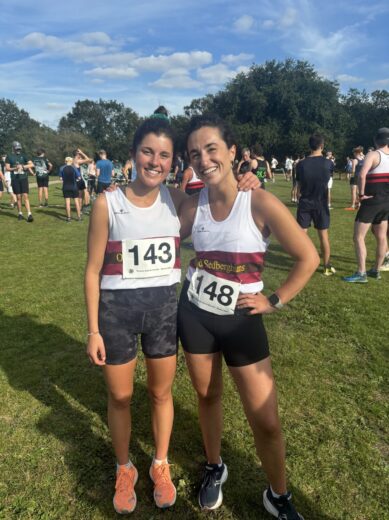
This is a long standing race hosted by Thames Hare & Hounds for old girls and boys of schools with strong cross country running traditions. It started in 1953 and has grown in popularity, now attracting around 300 runners from around 60 schools. The course of 5 miles on Wimbledon Common is a shortened version of the Blues Race course. The OS Running team has participated for a number of years with a growing number of runners.
All ages and running abilities are welcome! Seventy-year-olds compete with eighteen-year-olds – the fastest time is usually close to 25 mins and the back markers closer to 60 minutes.
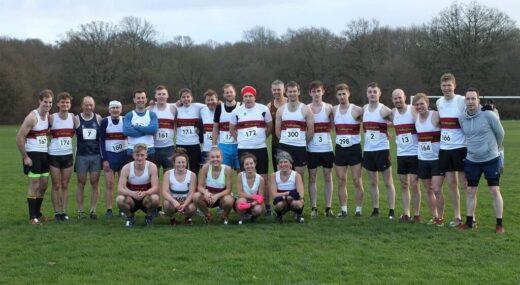
There are four team competitions within the race:
- The Henry VIII Trophy – an open race to be won by the team whose first four finishers have the lowest score, the winner of the race scoring 1 and so on upwards.
- The Old Brentwood’s Trophy – Veterans’ 40 race, participants to be aged 40 or over on race day, with three to score.
- The Chataway Trophy – the Veterans’ 50 race, participants to be aged 50 or over on race day, with three to score.
- The Old Denstonian Trophy – the Veterans’ 60 race, participants to be aged 60 or over on race day, with three to score.
- The Norman Berry Cup for the individual winner, who must be one of a team of at least three.
Event Information:
Annual London Alumni Cross Country Race
Saturday 12th September 2026
Race Starts at 3.00pm (Please arrive by 2:00pm for registration)
Course is 5 miles (Please visit the Thames Hare & Hounds website for more details)
Venue: Thames HQ, Wimbledon Common, London
Wimbledon Common is located on the A3 at the Richard Evans Memorial Playing Fields (Roehampton Vale, SW15 3PQ). The meeting venue is the Pavilion/Club House which overlooks the playing fields. There is ample parking located adjacent to the A3 and in front of the Pavilion/Club House.
This will be followed by the usual custom of OS drinks and dinner at the Green Man Pub, Putney Heath.
If you interested in taking part in the Old Sedberghian Running team we would be delighted to hear from you – please contact Benjamin Collins at bpc@sedberghschool.org.
 Northampton Saints emerged victorious in a ‘proper final’ as they overcame Exeter Chiefs to secure the Gallagher PREM title for the second time in three years, according to winning Director of Rugby, OS Phil Dowson (H 93-00).
The men in Black, Green and Gold crossed the whitewash four times in Saturday’s clash at Allianz Stadium, Twickenham, overcoming a resolute Chiefs side to secure a third PREM title in the club’s history.
“We were outstanding throughout the season,” said Dowson. “It’s nice now to be able to put a full stop on it with a big tin cup and say. ‘we were the best side in the league’.
Read full article on Northampton Saint’s website HERE.
The OS Club and the School were lucky enough to catch up with Phil at the OS SSFC Rugby Dinner in March – watch the interview HERE.
Two Old Sedberghians were also on the bench for Exeter – Kane James (S 21-23) and Will Haydon-Wood (P 12-19). At the Exeter Chiefs awards night recently, Will was named Club Man of the Year and Kane won Community Player of the Year.
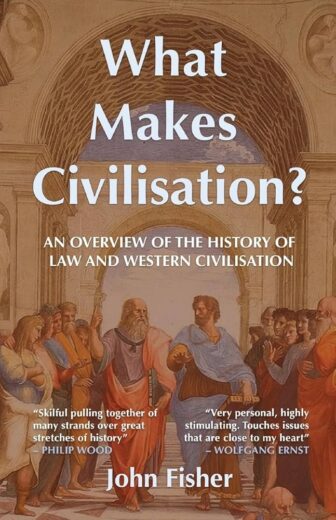
Kane has also been named in the Wales squad for the upcoming Nations Championship finals which involve 3 fixtures in July (Fiji, Argentina and South Africa). If Kane plays, he’ll be Sedbergh’s latest full international and our first in over 5 years since Cameron Redpath in February 2021 for Scotland v England.OS John Fisher (P 65–69) has recently published a new book: What Makes Civilisation? An Overview of the History of Law and Western Civilisation.
Drawing on a distinguished legal career spanning more than five decades, John examines over 3,000 years of history, from the Mycenaeans of ancient Greece to the modern world. The book explores a subject that he believes is too often overlooked by historians, economists and politicians alike: the crucial role that law has played in the development of civilisation.
John dedicates a few words to Sedbergh School in his book, thanking it for “giving me the mental strength to carry on, despite all obstacles, when lost on the fells in the pouring rain.”
After leaving Sedbergh, John studied law at Leeds University before joining the international law firm Allen & Overy. He later moved to Hong Kong, where he became a litigation partner in an international practice and represented Hong Kong at rugby. In 2003, he established his own legal firm and continues to practice as a notary public.
In What Makes Civilisation? John argues that the contribution of legal systems to the growth and stability of societies has frequently been underestimated. Through a concise and accessible overview of history, he traces the development of law and its influence on Western civilisation, while also comparing Western society with other great civilisations and reflecting on contemporary issues such as postmodernism and the rule of law.
Published in March 2026, the book offers a thought-provoking perspective on the forces that have shaped human society and the enduring importance of legal institutions.
We congratulate John on this latest achievement and wish him every success with the book.
If you wish to purchase a copy, please visit these websites:
Waterstones – https://www.waterstones.com/book/what-makes-civilisation/john-fisher/9781919414300
Amazon – https://www.amazon.co.uk/What-Makes-Civilisation-Overview-History/dp/1919414304
 The 1525 Society enjoyed two memorable lunches recently, bringing together OS, parents and friends of the School in both Sedbergh and London. These occasions also marked the first official lunches hosted by the Society’s new President, Major General Jonathan David Shaw CB CBE (S 1970–75).
The first gathering took place on Saturday 9th May at the Black Bull Inn, Sedbergh, where guests enjoyed a warm atmosphere alongside a menu created by Head Chef Nina Matsunaga. Celebrated for its hyper-local, foraged and ethically sourced produce, the dining experience provided the perfect setting for old friends to reconnect and share memories.
The second lunch was held on Friday 5th June at Browns Covent Garden in London. Guests were treated to an elevated British brasserie experience, where timeless favourites and seasonally inspired dishes were served in elegant yet relaxed surroundings. Joining the event was Robin Pyper, the newly appointed Headmaster of Sedbergh School, who spoke warmly about the welcoming spirit of Sedbergh and the strong sense of community that continues to define the School today.
At both events, Jonathan shared his reflections on the challenges and opportunities facing younger generations. He emphasised that, in an era increasingly shaped by artificial intelligence, the importance of integrity and strong personal values has never been greater. Young people must develop the ability to communicate effectively, lead with authenticity, and uphold strong principles, qualities that no technology can replicate.
His message resonated deeply with the values of a Sedbergh education. He stressed the importance of resilience, reminding guests that setbacks are part of life and can help people grow and improve.
Jonathan also reflected on becoming President of the 1525 Society. His father, Michael Shaw, Lord Shaw of Northstead JP DL (S 1934–38), served as the Society’s first President, making it a particular honour for Jonathan to follow in his footsteps and continue that family connection with Sedbergh.
Looking ahead, he spoke about the importance of supporting the School during changing times and ensuring that Sedbergh’s values continue for future generations.
Both lunches were a chance to reconnect, share experiences and celebrate the strong links within the Sedbergh community, and we look forward to welcoming members to future 1525 Society events.
If you would like more information about the 1525 Society or how to become a member, please contact the Foundation at foundation@sedberghschool.org, or visit our website HERE.